Showing posts with label los angeles ac. Show all posts

Friday, August 5, 2011

Thermostats and Control Systems- Los Angeles Air Conditioning


You can save around 10% a year on your Los Angeles Air Conditioning heating and cooling bills by simply turning your thermostat back 10°–15° for eight hours. You can do this automatically without sacrificing comfort by installing an automatic setback or programmable thermostat for your Los Angeles Air Conditioning system.

A programmable thermostat offers a lot of flexibility in its temperature settings.

Using a programmable thermostat, you can adjust the times you turn on the LA heating or LA air-conditioning according to a pre-set schedule. As a result, you don't operate the equipment as much when you are asleep or when the house is not occupied.

Programmable thermostats can store and repeat multiple daily settings (six or more temperature settings a day) that you can manually override without affecting the rest of the daily or weekly program. When shopping for a programmable thermostat, be sure to look for the ENERGY STAR label.

General Thermostat Operation

You can easily save energy in the winter by setting the thermostat to 68°F while you're awake and setting it lower while you're asleep or away from home. By turning your thermostat back 10°–15° for 8 hours, you can save about 5%–15% a year on your heating bill—a savings of as much as 1% for each degree if the setback period is eight hours long. The percentage of savings from setback is greater for buildings in milder climates than for those in more severe climates.

In the summer, you can follow the same strategy with central LA air conditioning, too, by keeping your house warmer than normal when you are away, and lowering the thermostat setting to 78°F (26°C) only when you are at home and need cooling. Although thermostats can be adjusted manually, programmable thermostats will avoid any discomfort by returning temperatures to normal as you wake or return home.

A common misconception associated with thermostats is that a furnace works harder than normal to warm the space back to a comfortable temperature after the thermostat has been set back, resulting in little or no savings. This misconception has been dispelled by years of research and numerous studies. The fuel required to reheat a building to a comfortable temperature is roughly equal to the fuel saved as the building drops to the lower temperature. You save fuel between the time that the temperature stabilizes at the lower level and the next time heat is needed. So, the longer your house remains at the lower temperature, the more energy you save.

Limitations For Homes with Heat Pumps, Electric Resistance Heating, Steam Heat, and Radiant Floor Heating

Programmable thermostats are generally not recommended for heat pumps. In its cooling mode, a heat pump operates like an air conditioner, so turning up the thermostat (either manually or with a programmable thermostat) will save energy and money. But when a heat pump is in its heating mode, setting back its thermostat can cause the unit to operate inefficiently, thereby canceling out any savings achieved by lowering the temperature setting. Maintaining a moderate setting is the most cost-effective practice. Recently, however, some companies have begun selling specially designed programmable thermostats for heat pumps, which make setting back the thermostat cost effective. These thermostats typically use special algorithms to minimize the use of backup electric resistance heat systems.

Electric resistance systems, such as electric baseboard heating, require thermostats capable of directly controlling 120-volt or 240-volt circuits. Only a few companies manufacture line-voltage programmable thermostats.

For steam heating and radiant floor heating systems, the problem is their slow response time: both types of systems may have a response time of several hours. This leads some people to suggest that setback is inappropriate for these systems. However, some manufacturers now offer thermostats that track the performance of your heating system to determine when to turn it on in order to achieve comfortable temperatures at your programmed time.

Alternately, a normal programmable thermostat can be set to begin its cool down well before you leave or go to bed and return to its regular temperature two or three hours before you wake up or return home. This may require some guesswork at first, but with a little trial and error you can still save energy while maintaining a comfortable home.

Choosing and Programming a Programmable Thermostat

Most programmable thermostats are either digital, electromechanical, or some mixture of the two. Digital thermostats offer the most features in terms of multiple setback settings, overrides, and adjustments for daylight savings time, but may be difficult for some people to program. Electromechanical systems often involve pegs or sliding bars and are relatively simple to program.

When programming your Los Angeles Air Conditioning thermostat, consider when you normally go to sleep and wake up. If you prefer to sleep at a cooler temperature during the winter, you might want to start the temperature setback a bit ahead of the time you actually go to bed; you probably won't notice the house cooling off as you prepare for bed. Also consider the schedules of everyone in the household; is there a time during the day when the house is unoccupied for four hours or more? If so, it makes sense to adjust the temperature during those periods.

Other Considerations

The location of your thermostat can affect its performance and efficiency. Read the manufacturer's installation instructions to prevent "ghost readings" or unnecessary furnace or air conditioner cycling. Place thermostats away from direct sunlight, drafts, doorways, skylights, and windows. Also make sure your thermostat is conveniently located for programming.

Thursday, August 4, 2011

Indoor Air Quality- How do molds affect people? Los Angeles Air Conditioning


Los Angeles Air Conditioning is here to inform you that indoor air quality is really important. Not everyone realizes that the quality of the air inside your house is sometimes worse than the air quality outside. Mold can be a big issue and negatively contribute to your air quality. Some people are sensitive to molds. For these people, exposure to molds can cause symptoms such as nasal stuffiness, eye irritation, wheezing, or skin irritation. Some people, such as those with serious allergies to molds, may have more severe reactions. Severe reactions may occur among workers exposed to large amounts of molds in occupational settings, such as farmers working around moldy hay. Severe reactions may include fever and shortness of breath. Some people with chronic lung illnesses, such as obstructive lung disease, may develop mold infections in their lungs.

EPA's publication, Indoor Air Pollution: An Introduction for Health Professionals, assists health professionals (especially the primary care physician) in diagnosis of patient symptoms that could be related to an indoor air pollution problem in Los Angeles Air Conditioning. It addresses the health problems that may be caused by contaminants encountered daily in the home and office. Organized according to pollutant or pollutant groups such as environmental tobacco smoke, VOCs, biological pollutants, and sick building syndrome, this booklet lists key signs and symptoms from exposure to these pollutants, provides a diagnostic checklist and quick reference summary, and includes suggestions for remedial action. Also includes references for information contained in each section. This booklet was developed by the American Lung Association, the American Medical Association, the U.S. Consumer Product Safety Commission, and the EPA. EPA Document Reference Number 402-R-94-007, 1994. Los Angels AC

Allergic Reactions - excerpted from Indoor Air Pollution: An Introduction for Health Professionals section on: Animal Dander, Molds, Dust Mites, Other Biologicals. Los Angeles AC

"A major concern associated with exposure to biological pollutants is allergic reactions, which range from rhinitis, nasal congestion, conjunctival inflammation, and urticaria to asthma. Notable triggers for these diseases are allergens derived from house dust mites; other arthropods, including cockroaches; pets (cats, dogs, birds, rodents); molds; and protein-containing furnishings, including feathers, kapok, etc. In occupational settings, more unusual allergens (e.g., bacterial enzymes, algae) have caused asthma epidemics. Probably most proteins of non-human origin can cause asthma in a subset of any appropriately exposed population."

Los Angeles Air Conditioning company, American Air Conditioning & Heating has been proudly serving the Los Angeles County area for over 30 years. Give us a call today with any questions about mold, indoor air quality or anything about Los Angeles Air Conditioning!

Thursday, July 28, 2011

Radon Risk Assessment Fact Sheet- Los Angeles Air Conditioning


Los Angeles air conditioning experts are here to talk a little bit about Radon. EPA’s indoor radon program promotes voluntary public actions to reduce the risks from indoor radon. EPA and the U.S. Surgeon General recommend that people do a simple home test and if high levels of radon are confirmed, reduce those high levels with straight-forward techniques.

EPA recently completed an updated assessment of the Agency’s estimates of lung cancer risks from indoor radon. This assessment reinforces EPA’s recommendations on radon that homeowners with Los Angeles air conditioning should still test and fix their homes for radon.

Found all over the U.S., radon is a naturally occurring radioactive gas without color, odor, or taste that comes from the radioactive decay of uranium in soil, rock, and groundwater. It emits ionizing radiation during its radioactive decay to several radioactive isotopes known as radon decay products.

Radon gets into the indoor air primarily from soil under homes and other buildings. Radon is a known human lung carcinogen and is the largest source of radiation exposure and risk to the general public. Most inhaled radon is rapidly exhaled, but the inhaled decay products readily deposit in the lung, where they irradiate sensitive cells in the airways increasing the risk of lung cancer.

EPA updated the Agency’s estimates of lung cancer risks from indoor radon based on the National Academy of Sciences’ (NAS) latest report on radon, the Biological Effects of Ionizing Radiation (BEIR) VI Report (1999). This report is the most comprehensive review of scientific data gathered on radon and builds on and updates the findings of the previous NAS BEIR IV Report (1988). NAS concluded that the findings of BEIR VI showed that if homeowners haven’t yet tested their homes for radon and fixed them if the levels are elevated, they should do so.

The NAS BEIR VI Report confirmed EPA’s long-held position that radon is the second leading cause of lung cancer and a serious public health problem. NAS estimated that radon causes about 20,000 lung cancer deaths each year. The report found that even very small exposures to radon can result in lung cancer and concluded that no evidence exists that shows a threshold of exposure below which radon levels are harmless. The report also concludes that many smokers will get lung cancer due to their radon exposure who otherwise would not have gotten lung cancer. This is because of the synergistic relationship between radon and cigarette smoking in causing lung cancer.

To update EPA’s previous risk estimates, EPA worked closely with the Agency’s Science Advisory Board (SAB), an independent panel of scientific experts, to determine how best to apply the various risk models developed by the BEIR VI committee. EPA incorporated the SAB’s advice and recommendations for modifying and extending the methods and approaches used in BEIR VI and constructed a single model yielding results midway between the results obtained using the two models preferred by the BEIR VI committee. These adjustments did not result in significant changes to the BEIR VI risk estimates.

EPA’s updated calculation of a best estimate of annual lung cancer deaths from radon is about 21,000 (with an uncertainty range of 8,000 to 45,000) and is consistent with the estimates of the BEIR VI Report. [EPA’s previous best estimate of annual lung cancer deaths from inhaled radon was based on the earlier BEIR IV Report and was about 14,000 (with an uncertainty range of 7,000 to 30,000).]

The SAB-endorsed modifications included applying the Agency’s definition of excess risk that includes all radon-induced lung cancer deaths, rather than excluding premature deaths caused by radon in people who would otherwise have eventually died of lung cancer. EPA also used more detailed smoking prevalence data and more recent mortality data to calculate risks than were used by the BEIR VI committee. EPA also calculated numerical estimates of the risk per unit exposure [lung cancer deaths per working level month (WLM)], whereas BEIR VI estimated the fractional increase in lung cancers due to radon.

For further questions contact Los Angeles Air Conditioning experts, American Air Conditioning & Heating, drop us a line on our Facebook page or give us a call at +1(800) 321-9494.

Tuesday, July 26, 2011

Overheated Clothes Dryers Can Cause Fires- Los Angeles Air Conditioning


Los Angeles air conditioning experts are here to help you with more than just tips for your Los Angeles AC! We want to leave our customers knowing that they can get tips for overall home safety for their wonderful families. Feel free to drop a line on our Facebook page, we would love your feedback!

To help prevent fires:

Clean the lint screen/filter before or after drying each load of clothes. If clothing is still damp at the end of a typical drying cycle or drying requires longer times than normal, this may be a sign that the lint screen or the exhaust duct is blocked.

Clean the dryer vent and exhaust duct periodically. Check the outside dryer vent while the dryer is operating to make sure exhaust air is escaping. If it is not, the vent or the exhaust duct may be blocked. To remove a blockage in the exhaust path, it may be necessary to disconnect the exhaust duct from the dryer. Remember to reconnect the ducting to the dryer and outside vent before using the dryer again.

Clean behind the dryer, where lint can build up. Have a qualified service person clean the interior of the dryer chassis periodically to minimize the amount of lint accumulation. Keep the area around the dryer clean and free of clutter.

Replace plastic or foil, accordion-type ducting material with rigid or corrugated semi-rigid metal duct. Most manufacturers specify the use of a rigid or corrugated semi-rigid metal duct, which provides maximum airflow. The flexible plastic or foil type duct can more easily trap lint and is more susceptible to kinks or crushing, which can greatly reduce the airflow.

Take special care when drying clothes that have been soiled with volatile chemicals such as gasoline, cooking oils, cleaning agents, or finishing oils and stains. If possible, wash the clothing more than once to minimize the amount of volatile chemicals on the clothes and, preferably, hang the clothes to dry. If using a dryer, use the lowest heat setting and a drying cycle that has a cool-down period at the end of the cycle. To prevent clothes from igniting after drying, do not leave the dried clothes in the dryer or piled in a laundry basket.

Los Angeles air conditioning can help take preventative methods towards protecting your family. CPSC Document # 5022

Monday, July 25, 2011

Los Angeles AC Condensers


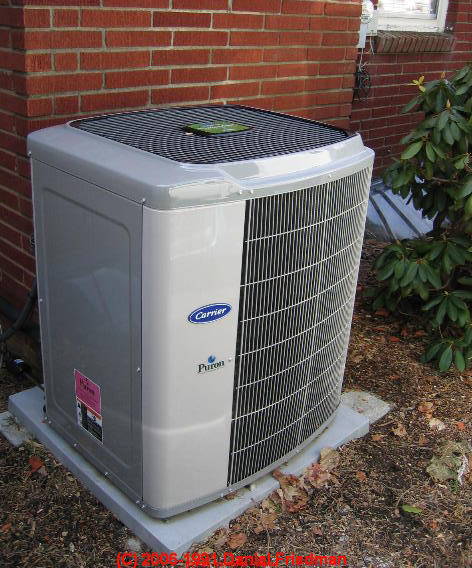
Los Angeles AC condensers are essential to central Los Angeles air conditioning systems. An AC condenser unit will usually consist of a heat exchanger, a compressor and a fan. The heat exchanger cools and condenses the incoming refrigerant vapor into liquid, the compressor raises the pressure of the refrigerant and forces it to move and the fan blows the outer air through the heat exchanger. This results in a cooling of the refrigerant inside the home AC condenser. A central AC condenser is typically located outside the home with a layer of tubing between it and the building that ushers vapor refrigerant in and pulls liquid refrigerant out.

There are many factors that may keep Los Angeles AC condensers from running efficiently, which can keep your home from being as cool as you want it to be and cause unnecessary expenses on your electric bill. Cleaning AC condenser units is often all it takes, which should be part of your annual maintenance service. Or if components of the system are not functioning properly, AC condenser repair may be necessary to make your home comfortable and energy efficient again.

Los Angeles AC condenser replacement may also be the best option if your unit is beyond repair or if it is unable to meet today’s energy efficiency standards. The team of skilled technicians at American Air Conditioning & Heating is prepared to replace Los Angeles AC condenser units for homes of all shapes and sizes in the greater Los Angeles area. We can provide detailed information about the AC condensers that are available, install the unit with the utmost professionalism and provide all the maintenance and repair services you need to keep it running smoothly and efficiently.

Thursday, July 21, 2011

Los Angeles Air Conditioning Repair


Los Angeles Air conditioning repair is an extremely important service with the often warm and sometimes scorching hot weather of Southern California. If you have invested in an air conditioning unit or purchased a home with central heating, Los Angeles AC repair will inevitably be necessary to keep the system in good working order and to prevent further problems. Los Angeles air conditioning service providers can also help with annual cleaning and maintenance to make sure your Los Angeles AC unit lasts as long as possible and to catch small repairs before they become much bigger issues.

You don’t want to hire just anyone to do your air conditioning repairs; it is best to trust this critical job to a highly trained and experienced professional. There are many air conditioner repair companies out there that all promise great things, but not all are able to deliver. This is why it’s a good idea to find a company like American Air Conditioning & Heating that you can trust for air conditioning maintenance and other services long before you actually need any major repairs. When you do find yourself in an emergency and need urgent Los Angeles AC repairs, the last thing you want to do is call the first company you can find without having the time to investigate their services.

When choosing a company to rely on for air conditioner repair and maintenance, the most important thing to look for is a highly skilled and reliable team of technicians. At American Air Conditioning & Heating, for example, all technicians must pass a complete drug test, physical and personality exam before being hired. They must also undergo a DMV and criminal background report, and before any technician begins servicing customers’ air conditioners, they must complete an extensive apprenticeship program with factory training. Every air condition repair technician on the team is clean cut, neatly dressed, polite, courteous and respectful of clients’ homes. This is the kind of Los Angeles AC service provider you know you can trust.

As always visit American Air Conditioning & Heating for more information. We are also on Facebook and Twitter!

Tuesday, July 19, 2011

Sizing and Installation- Los Angeles Air Conditioning


Your new heating and cooling system should be a custom fit for your home. Los Angeles AC can help. Sizing and a handful of other installation practices can dramatically affect how well your new equipment will deliver comfort and savings. Expect to pay a little more for a good contractor who follows these practices.

  • Calculate the size of equipment
  • Seal and insulate ducts in attics and crawlspaces
  • Check and correct air flow
  • Proper refrigerant charging
  • Equipment placement
  • Calculate the size of equipment

For starters your new furnace, boiler, heat pump or Los Angeles air conditioner should be sized to fit your home. You can request a copy of the design load calculation used to determine the right size of equipment for your home. A good contractor will not size your equipment solely on the square footage of your house or assume that your existing equipment was sized properly in the first place. Proper equipment sizing is based your home's heat loss during cold weather and heat gains during warm weather.

To complete the design load calculation the contractor will need to take measurements during the initial visit to your home and ask you some questions. The calculation is usually done using software, and should be based on professional guidelines such as Manual J from the Air Conditioning Contractors of America (ACCA) or similar method. Oversized equipment can cause reduced comfort and excessive "air" noise. Oversizing will shorten the life of the equipment by causing it to cycle on and off more frequently than a properly-sized unit. Undersized equipment, with airflow that is too low, can reduce the efficiency of the air distribution and accelerate wear on system components, leading to earlier failure.

After the design load calculation is completed, ducts, supply registers, and return grilles can be sized and selected using professional guidelines in ACCA's Manual D or similar method.

Seal and insulate ducts in attics and crawlspaces

If you’re installing Los Angeles Air Conditioning and you choose a central air conditioner, furnace or heat pump ask your contractor about the condition of your air ducts. A good contractor should be able to test your air ducts to identify and seal leaks.

Duct sealing should be done by a professional using mastic, metal-backed tape or aerosol-based sealing.
In some instances, your contractor may advise you that it is necessary to replace or add ducts. If there are insufficient supply registers or return air grilles in your home, it may be necessary to install additional ducts to accommodate the need for registers or grilles. When possible ducts should be located within conditioned space. If the ducts must be in unconditioned space (attic or crawlspace) they should be insulated.
Check and correct airflow

For central air conditioners, furnaces or heat pumps there is an optimal air flow for comfort and savings.

If airflow is too high, duct leakage increases and the temperature at the register is not sufficient for optimal home comfort.
If airflow is too low, distribution efficiency drops and accelerates the wear on system components leading to premature failure.
A good contractor will test the air flow of your heating and cooling system and make adjustments for optimal performance. Typically, testing and adjustments should be done after duct leakage repairs have been completed.

Proper refrigerant charging

If your are installing a new central air conditioner or heat pump you should know that recent field studies suggest that approximately 75% of installed cooling equipment may have incorrect amount of refrigerant. Incorrect refrigerant level can lower efficiency by 5 to 20% and can ultimately cause premature component failure, resulting in costly repairs that could have been prevented. A good contractor will use one of three methods, recommended by equipment manufacturers, to verify the correct refrigerant level. These methods include super-heat, sub-cooling, or weigh. Ask your contractor how they verify the refrigerant level is correct.

In addition, you should know that since 1992, in order to protect the earth's atmosphere (ozone layer), all technicians must be certified to handle refrigerant. Ask them to show you proof of refrigerant handling certification.

Equipment placement

Placement of new equipment is unique for every home, but a good contractor should follow manufacturer's installation instructions for best results. For example, Indoor equipment should be installed in conditioned space, or a space that is well insulated. The Outdoor compressors should be placed out of the sun and kept free of debris. Equipment should be installed in an accessible area for easy maintenance. Allow plenty of room for free airflow on all sides of the equipment. Thermostats should be placed away from direct sunlight, drafts, doorways, skylights and windows.

Monday, July 18, 2011

Methods of Controlling Indoor Air Pollution- Los Angeles Air Conditioning

Los Angeles ac.
The three most common approaches to reducing indoor air pollution, in order of effectiveness, are:

1. Source Control: Eliminate or control the sources of pollution;
2. Ventilation: Dilute and exhaust pollutants through outdoor air ventilation, and
3. Air Cleaning: Remove pollutants through proven air cleaning methods.

Of the three, the first approach -- Source Control -- is the most effective. This involves minimizing the use of products and materials that cause indoor pollution, employing good hygiene practices to minimize biological contaminants (including the control of humidity and moisture, and occasional cleaning and disinfection of wet or moist surfaces), and using good housekeeping practices to control particles. Keep your Los Angeles air conditioning clean!

The second approach -- Outdoor Air Ventilation -- is also effective and commonly employed. Ventilation methods include installing an exhaust fan close to the source of contaminants, increasing outdoor air flows in mechanical ventilation systems, and opening windows, especially when pollutant sources are in use. Los Angeles A/C must have a great ventilation system.

The third approach -- Air Cleaning -- is not generally regarded as sufficient in itself, but is sometimes used to supplement source control and ventilation. Air filters, electronic particle air cleaners and ionizers are often used to remove airborne particles, and gas adsorbing material is sometimes used to remove gaseous contaminants when source control and ventilation are inadequate. Los Angeles A/C air cleaning is important.

Three Basic Strategies

Source Control- Los Angeles Air Conditioning

Usually the most effective way to improve indoor air quality is to eliminate individual sources of pollution or to reduce their emissions. Some sources, like those that contain asbestos, can be sealed or enclosed; others, like gas stoves, can be adjusted to decrease the amount of emissions. In many cases, source control is also a more cost-efficient approach to protecting indoor air quality than increasing ventilation because increasing ventilation can increase energy costs. Specific sources of indoor air pollution in your home are listed later in this section.

Ventilation Improvements- Los Angeles AC

Another approach to lowering the concentrations of indoor air pollutants in your home is to increase the amount of outdoor air coming indoors. Most home heating and cooling systems, including forced air heating systems, do not mechanically bring fresh air into the house. Opening windows and doors, operating window or attic fans, when the weather permits, or running a window air conditioner with the vent control open increases the outdoor ventilation rate. Local bathroom or kitchen fans that exhaust outdoors remove contaminants directly from the room where the fan is located and also increase the outdoor air ventilation rate.

It is particularly important to take as many of these steps as possible while you are involved in short-term activities that can generate high levels of pollutants--for example, painting, paint stripping, heating with kerosene heaters, cooking, or engaging in maintenance and hobby activities such as welding, soldering, or sanding. You might also choose to do some of these activities outdoors, if you can and if weather permits.

Advanced designs of new homes are starting to feature mechanical systems that bring outdoor air into the home. Some of these designs include energy-efficient heat recovery ventilators (also known as air-to-air heat exchangers).

For more information about air-to-air heat exchangers, contact the U.S. Department of Energy's Energy Efficiency and Renewable Energy's Office (EERE) at www.eere.energy.gov/. You may contact the EERE Information Center with questions on EERE's products, services, and 11 technology programs by calling 1-877-EERE-INF (1-877-337-3463).

Air Cleaners- Los Angeles Air Conditioning

There are many types and sizes of air cleaners on the market, ranging from relatively inexpensive table-top models to sophisticated and expensive whole-house systems. Some air cleaners are highly effective at particle removal, while others, including most table-top models, are much less so. Air cleaners are generally not designed to remove gaseous pollutants.

The effectiveness of an air cleaner depends on how well it collects pollutants from indoor air (expressed as a percentage efficiency rate) and how much air it draws through the cleaning or filtering element (expressed in cubic feet per minute). A very efficient collector with a low air-circulation rate will not be effective, nor will a cleaner with a high air-circulation rate but a less efficient collector. The long-term performance of any air cleaner depends on maintaining it according to the manufacturer's directions.

Another important factor in determining the effectiveness of an air cleaner is the strength of the pollutant source. Table-top air cleaners, in particular, may not remove satisfactory amounts of pollutants from strong nearby sources. People with a sensitivity to particular sources may find that air cleaners are helpful only in conjunction with concerted efforts to remove the source.

Over the past few years, there has been some publicity suggesting that houseplants have been shown to reduce levels of some chemicals in laboratory experiments. There is currently no evidence, however, that a reasonable number of houseplants remove significant quantities of pollutants in homes and offices. Indoor houseplants should not be over-watered because overly damp soil may promote the growth of microorganisms which can affect allergic individuals.

At present, EPA does not recommend using air cleaners to reduce levels of radon and its decay products. The effectiveness of these devices is uncertain because they only partially remove the radon decay products and do not diminish the amount of radon entering the home. EPA plans to do additional research on whether air cleaners are, or could become, a reliable means of reducing the health risk from radon. EPA's booklet, Residential Air-Cleaning Devices, provides further information on air-cleaning devices to reduce indoor air pollutants.

For most indoor air quality problems in the home, source control is the most effective solution. This section takes a source-by-source look at the most common indoor air pollutants, their potential health effects, and ways to reduce levels in the home. (For a summary of the points made in this section, see the section entitled "Reference Guide to Major Indoor Air Pollutants in the Home").

Ozone Generators That Are Sold As Air Cleaners (which is only available via Los Angeles AC specialists American Air Conditioning & Heating's website) was prepared by EPA to provide accurate information regarding the use of ozone-generating devices in indoor occupied spaces. This information is based on the most credible scientific evidence currently available.