Showing posts with label LA AC. Show all posts

Thursday, August 18, 2011

ENERGY STAR label in Los Angeles Air Conditioning - What does it mean?


So at this point you have probably heard of Energy Star and you may have seen an Energy Star label or two. But, we find that many of our customers are asking what Energy Star really means. Los Angeles air conditioning experts are here and ready to talk about the Energy Star label!

We feel strongly about the fact that credibility is extremely important. As consumers we are not always 100% certain about some things when it comes to the products we need to buy in order to have a comfortable lifestyle at home. Energy Star is a government backed symbol that is trusted for energy efficiency. This helps you easily see what will help save you money and protect the environment through energy-efficient products!

It is ok to feel a bit overwhelmed when you are investigating that first Los Angeles air conditioning system. That is why the professionals here at American Air Conditioning & Heating are here to help you!

A bunch of people got together to create the Energy Star label. They created it to help reduce greenhouse gas emissions. It also fights the movement against pollutants cause by waster energy. As consumers we love to save money! The Energy Star label has created the ability to over savings directly to the customer! Performance, features, lower energy bills and comfort all in one! Feel good while feeling good.

The EPA (Environmental Protection Agency) is in charge of determining which products earn this label. There are different energy efficiency requirements that have been set in place to determine and set that standards for products that are energy efficient. There are key guidelines that are followed to determine this. Los Angeles air conditioning experts are bringing them to you here quickly and if you have any further questions feel free to give us a call and chat about it! +1 (800) 321-9494

The Guidelines:

Product categories must contribute significant energy savings nationwide.
Qualified products must deliver the features and performance demanded by consumers, in addition to increased energy efficiency.

If the qualified product costs more than a conventional, less-efficient counterpart, purchasers will recover their investment in increased energy efficiency through utility bill savings, within a reasonable period of time.

Energy efficiency can be achieved through broadly available, non-proprietary technologies offered by more than one manufacturer.

Product energy consumption and performance can be measured and verified with testing.
Labeling would effectively differentiate products and be visible for purchasers.

American Air Conditioning & Heating has been the Los Angeles air conditioning experts for over 30 years now. We are constantly striving to provide the best customer service possible. Please let us know if there is anything we can do to help you.

Tuesday, August 16, 2011

Benefits of the CFC Phase-Out- Los Angeles Air Conditioning


Benefits of the CFC Phase-out

The CFC phase out is already producing benefits for the environment, businesses, and inpiduals. This fact sheet explains some of these benefits. Several case studies of successful conversions to alternatives are listed also. Los Angeles Air Conditioning experts like to keep you up to date on all the latest information. If you ever have any questions about heating or LA air conditioning feel free to give American Air Conditioning a call to day at +1 (800) 321-9494.

Protection of the Ozone Layer


The chlorofluorocarbon (CFC) production phase out is an important turning point in the recovery of the ozone layer. Currently, we are experiencing depletion of approximately 5 percent at mid-latitudes, but if no action had been taken to limit CFCs, ozone depletion at mid-latitudes would eventually have reached 20 percent or more.

Because of the phase out, CFCs are no longer accumulating in the atmosphere at an accelerating rate. Scientists predict that maximum CFC levels will occur before the turn of the century. If international agreements are adhered to, the ozone layer is expected to recover around 2050. Much more information on the science of ozone depletion is available online.

Reduced Health Risks

The phase out of CFCs is expected to have direct health benefits over the next century, including reduced incidence of skin cancer and cataracts, decreased risks to human immune systems, and increased protection of plant and animal life from excessive UV exposure. A United Nations Environment Programmer (UNEP) study shows that a sustained 1 percent decrease in stratospheric ozone will result in about a 2 percent increase in the incidence of non-melanoma skin cancer, which can be fatal. With the successful phase out of CFCs, however, EPA expects 295 million fewer cases of this form of skin cancer over the next century.

New Technologies - Los Angeles Air Conditioning

The CFC phase out prompted research into alternative methods for cleaning applications in electronic assemblies and precision parts. Users often found that the need for chemicals during cleaning processes was reduced or even eliminated, while maintaining product quality and reducing costs. Precision ball bearings, medical devices, and sophisticated electronics components are now being produced using aqueous cleaning. New "no-clean" technologies eliminate the cleaning process altogether for printed circuit boards.

Energy Savings - Los Angeles Air Conditioning

The CFC phase out provided an impetus to develop and invest in a new generation of energy efficient air-conditioning and refrigeration equipment. Electric utilities have acknowledged this benefit by providing financial incentives for installing energy-efficient equipment. Aside from substantial lifetime energy and dollar savings, equipment upgrades also improve occupant comfort, system reliability, and operation and maintenance.

The Air Conditioning and Refrigeration Institute (ARI) reports that by 1998, 44 percent of existing chillers (large scale air conditioning units for buildings) will be converted or replaced with equipment that uses non-CFC refrigerants. This conversion to more efficient equipment is anticipated to reduce energy use by almost 7 billion kilowatt hours per year, amounting to $480 million annual savings for new equipment owners by January 1998.

Pollution Prevention - LA AC

The energy savings from equipment upgrades mean that less fossil fuels are burned at the power plant, leading to reduced emissions of air pollutants including carbon dioxide (CO2), nitrogen oxides (NOx), and sulfur dioxide (SO2). These pollutants are responsible for global warming and acid rain. By 1998, chiller conversions and replacements are estimated to avoid emissions of 4 million tons of CO2, and 34,000 tons of SO2. The reduction in SO2 represents the annual emissions of one and a half large coal-fired power plants.

Wednesday, August 10, 2011

Is Your Home Making You Sick? - Los Angeles Air Conditioning


Los Angeles air conditioning experts thought to understand why many of today’s health problems can be caused by the home you live in, you need to look back a few years to see what caused this to happen. You see, during the energy crisis of the early 1970s, highly insulated “tight” homes became popular because of their potential to reduce energy costs.

Within a few years, however, complaints started to arise, due to health, and excessive moisture issues caused by indoor pollution, and associated moisture problems within these homes.

In the late 1980s and early 90s, indoor air quality became a nationally recognized issue. Even today, newer and more energy-efficient homes seemed predisposed to the problem. In addition, they retain more humidity and airborne pollutants, which causes longer life-spans, and more productive cycles of microbial activity within the home, such as mold, germs, bacteria and viruses.

This greater activity and concentration of these airborne contaminants, equates to more allergic reactions, and sickness within families, for longer periods of time.

MOLD: A SURVIVOR

Why is mold so difficult to control? Mold is at the bottom of the food chain. It thrives on very little, grows rapidly, and produces spores, volatile organic com-pounds, and other toxins. One organism can multiply to trillions in less than three weeks. When given the right conditions, mold can occur anywhere; in homes, schools, workplaces, entertainment centers, vehicles, etc.

The interior of your ductwork and air conditioning equipment, provides an ideal environment for mold growth — especially in the air conditioners inside drain-pan where it is dark, damp, and filled with nutrients. The result can be like blowing air over a swamp or through a sewer and then into your home, vehicle, and workplace.

According to the World Health Organization (WHO), 60% of Indoor Air Quality (IAQ) problems and allergies may be mold-related. Some IAQ diagnosticians and practitioners today say the figure may be as high as 80%. The increased usage of air conditioning systems almost directly parallels the increase of allergies and IAQ problems.

As mold and bacteria grow on coils and in drain pans, they are disseminated through the ducts to occupied spaces. Some mold products (toxins) produce serious and sometimes life-threatening reactions, including allergy, asthma, hypersensitivity, pneumonitis, and in some extreme cases even bleeding lung disease.

Additionally, mold creates a troublesome maintenance problem. Its activity results in dirty coils, a loss of air-flow, loss of heat exchange efficiency, dirty and sometimes plugged drain pans, and excessive energy use.

USING UVC TECHNOLOGY

Los Angeles AC experts have found that the most successful way to handle system mold is through Ultraviolet (U.V.) germicidal lights. These U.V. systems are a recent breakthrough in protecting the health of a home.

Ultraviolet light in the “C" band (UVC) has been used for more than 65 years to kill microorganisms in hospitals, barber shops, laboratories, pharmaceutical plants, and at the nation's Center for Disease Control. Residential ultraviolet units have been independently tested and proved to be effective in the constantly moving air environments of heating and cooling systems, killing mold and bacteria quickly and effectively. The UVC energy attacks the organism’s DNA and either destroys it immediately or prevents it from reproducing.

For most people, the original motivation for installing the lights is to abate IAQ complaints and/or allergies. However, they are also pleased to learn that many hidden odors are also eliminated with U.V. technology. Los Angeles Air Conditioning

Monday, August 8, 2011

Hot Water Costs & Cost-Cutters - Los Angeles Air Conditioning


Your Los Angeles air conditioning experts, American Air Conditioning & Heating are here to give you tips on managing and saving money in every aspect of your home. Some ways to save on water-heating bills require greater financial investments than others. You may wish to consider the no- or low-cost options before making large purchases. Also allow for circumstances that may be unique to your household when deciding on the appropriate options (e.g., a small-capacity washing machine could meet the needs of a one person household efficiently). Although it is not feasible to eliminate water heating in your home, it is possible to substantially reduce water-heating costs without sacrificing comfort and convenience. We want to save money on Los Angeles AC and every other aspect of your home that uses energy.

Figuring out how much you spend to heat your water:

The next time you pay your Los Angeles air conditioning utility bill, try one simple calculation. Divide the total amount by seven. The result is the amount you spend to heat your water. (If you receive separate utility bills for gas and electricity, use the gas bill for this calculation if you have a gas water heater; use the electric bill if you have an electric water heater.)

Of course, you may think this cost is a small price to pay for the convenience of a hot shower. But during the course of a year, this cost adds up. And when you consider that 95 million households in this country pay the same percentage, it is easy to see how much money—and energy—is used to heat water.

Several measures can help you decrease water-heating costs in your home. Some specific actions include reducing the amount of hot water used, making your water-heating system more energy efficient, and using off-peak power to heat water.

Reducing the amount of hot water used:

Generally, four destination points in the home are recognized as end uses for hot water: faucets, showers, dishwashers, and washing machines. Now, you do not have to take cold showers, dine on dirty dishes, or wear dirty clothes to reduce your hotwater consumption. Less radical measures are available that will be virtually unnoticeable once you apply them.

Faucets and Showers:

Simply repairing leaks in faucets and showers can save hot water. A leak of one drip per second can cost $1 per month, yet could be repaired in a few minutes for less than that. And some apparently insignificant steps, when practiced routinely at your household, could have significant results. For example, turning the hot-water faucet off while shaving or brushing your teeth, as opposed to letting the water run, can also reduce water-heating costs. Another option is limiting the amount of time you spend in the shower. Other actions may require a small investment of time and money. Installing low-flow showerheads and faucet aerators can save significant amounts of hot water. Low-flow showerheads can reduce hot water consumption for bathing by 30%, yet still provide a strong, invigorating spray.

Faucet aerators, when applied in commercial and multifamily buildings where water is constantly circulated, can also reduce water-heating energy consumption. Older showerheads deliver 4 to 5 gallons (15.1 to 18.9 liters) of water per minute. Although a low-flow showerhead delivers slightly less water than a standard showerhead, the spray can still be invigorating.
[FS 204 January 1995] sets maximum water flow rates at 2.5 gallons (9.5 liters) per minute at a standard residential water pressure of 80 pounds per square inch (552 kilopascals).

A quick test can help you determine if your shower is a good candidate for a showerhead replacement: Turn on the shower to the normal pressure you use, hold a bucket that has been marked in gallon increments under the spray, and time how many seconds it takes to fill the bucket to the 1-gallon (3.8-liter) mark. If it takes less than 20 seconds, you could benefit from a low-flow showerhead. A top quality, low-flow showerhead will cost $10 to $20 and pay for itself in energy saved within 4 months. Lower quality showerheads may simply restrict water flow, which often results in poor performance. You will have more money during the summer to run that Los Angeles air conditioning system!

Because of the different uses of bathroom and kitchen faucets, you may need to have different water flow rates in each location. For bathroom faucets, aerators that deliver 0.5 to 1 gallon (1.9 to 3.8 liters) of water per minute may be sufficient. Kitchen faucets may require a higher flow rate of 2 to 4 gallons (7.6 to 15.1 liters) per minute if you regularly fill the sink for washing dishes. On the other hand, if you tend to let the water run when washing dishes, the lower flow rate of 0.5 to 1 gallon per minute may be more appropriate. Some aerators come with shut-off valves that allow you to stop the flow of water without affecting the temperature.

Automatic Dishwashers:

A relatively common assumption is that washing dishes by hand saves hot water. However, washing dishes by hand several times a day could be more expensive than operating some automatic dishwashers. If properly used, an efficient dishwasher can consume less energy than washing dishes by hand, particularly when you only operate the dishwasher with full loads.

The biggest cost of operating a dishwasher comes from the energy required to heat the water before it ever makes it to the machine. Heating water for an automatic dishwasher can represent about 80% of the energy required to run this appliance. Average dishwashers use 8 to 14 gallons (30.3 to 53 liters) of water for a complete wash cycle and require a water temperature of 140°F (60°C) for optimum cleaning.

But, setting your water heater so high could result in excessive standby heat loss. This type of heat loss occurs because water is constantly heated in the storage tank, even when no hot water is used. Furthermore, a water heater temperature of 120°F (48.9°C) is sufficient for other uses of hot water in the home. The question, then, is must you give up effective cleaning for hot water energy savings? The answer is no.

A “booster” heater can increase the temperature of the water entering the dishwasher to the 140°F recommended for cleaning. Some dishwashers have built-in boosters that will automatically raise the water temperature, while others require manual selection before the wash cycle begins. A booster heater can add about $30 to the cost of a new dishwasher but should pay for itself in water-heating energy savings in about 1 year if you also lower your water heater temperature. Reducing the water heater temperature is not advisable, however, if your dishwasher does not have a booster heater.

Another feature that reduces hot-water use in dishwashers is the availability of cycle selections. Shorter cycles require less water, thereby reducing the energy cost. The most efficient dishwasher currently on the market can cost half as much to operate as the most inefficient model.

If you are planning to purchase a new dishwasher, check the EnergyGuide labels and compare the approximate yearly energy costs among brands. Dishwashers fall into one of two categories—compact capacity or standard capacity. Although compact capacity dishwashers may appear to be more energy efficient, they hold fewer dishes and may force you to use the appliance more frequently than you would use a standard-capacity model. In this case, your energy costs could be higher than with the standard-capacity dishwasher.

Turning the hot-water faucet off while shaving or brushing your teeth, as opposed to letting the water run, can reduce water-heating costs. An efficient automatic dishwasher can consume less energy than washing dishes by hand, particularly when you only operate the dishwasher with full loads.

Washing Machines:

Like dishwashers, much of the cost—up to 90%—of operating washing machines is associated with the energy needed to heat the water. Unlike dishwashers, washing machines do not require a minimum temperature for optimum cleaning. Either cold or warm water can be used for washing most laundry loads; cold water is always sufficient for rinsing. Make sure you follow the cold-water washing instructions for your particular laundry detergent. Washing only full loads is another good rule of thumb for reducing hot-water consumption in clothes washers. As you would for dishwashers, consult the EnergyGuide labels when shopping for a new washing machine. Inefficient washing machines can cost three times as much to operate as efficient machines. Select a machine that allows you to adjust the water temperature and water levels for the size of the load. Also, front-loading machines use less water and, consequently, less energy than top loaders.

However, in this country, front loaders are not as widely available as top loaders. Keep in mind that the capacity of front loaders may be smaller than that of most top-loading machines.

Smaller capacity washing machines often have better EnergyGuide ratings. However, a reduced capacity might cause you to increase the number of loads you wash and possibly increase your energy costs.

Faucets, shower heads, dishwashers, and washing machines are only destination points for hot water in your home. The journey of your hot water before it reaches these outlets can be fraught with opportunities for energy losses. Fortunately, you can reduce the incidence of water heat loss from the point of departure to the point of arrival by applying a few basic measures.

Thursday, August 4, 2011

Indoor Air Quality- How do molds affect people? Los Angeles Air Conditioning


Los Angeles Air Conditioning is here to inform you that indoor air quality is really important. Not everyone realizes that the quality of the air inside your house is sometimes worse than the air quality outside. Mold can be a big issue and negatively contribute to your air quality. Some people are sensitive to molds. For these people, exposure to molds can cause symptoms such as nasal stuffiness, eye irritation, wheezing, or skin irritation. Some people, such as those with serious allergies to molds, may have more severe reactions. Severe reactions may occur among workers exposed to large amounts of molds in occupational settings, such as farmers working around moldy hay. Severe reactions may include fever and shortness of breath. Some people with chronic lung illnesses, such as obstructive lung disease, may develop mold infections in their lungs.

EPA's publication, Indoor Air Pollution: An Introduction for Health Professionals, assists health professionals (especially the primary care physician) in diagnosis of patient symptoms that could be related to an indoor air pollution problem in Los Angeles Air Conditioning. It addresses the health problems that may be caused by contaminants encountered daily in the home and office. Organized according to pollutant or pollutant groups such as environmental tobacco smoke, VOCs, biological pollutants, and sick building syndrome, this booklet lists key signs and symptoms from exposure to these pollutants, provides a diagnostic checklist and quick reference summary, and includes suggestions for remedial action. Also includes references for information contained in each section. This booklet was developed by the American Lung Association, the American Medical Association, the U.S. Consumer Product Safety Commission, and the EPA. EPA Document Reference Number 402-R-94-007, 1994. Los Angels AC

Allergic Reactions - excerpted from Indoor Air Pollution: An Introduction for Health Professionals section on: Animal Dander, Molds, Dust Mites, Other Biologicals. Los Angeles AC

"A major concern associated with exposure to biological pollutants is allergic reactions, which range from rhinitis, nasal congestion, conjunctival inflammation, and urticaria to asthma. Notable triggers for these diseases are allergens derived from house dust mites; other arthropods, including cockroaches; pets (cats, dogs, birds, rodents); molds; and protein-containing furnishings, including feathers, kapok, etc. In occupational settings, more unusual allergens (e.g., bacterial enzymes, algae) have caused asthma epidemics. Probably most proteins of non-human origin can cause asthma in a subset of any appropriately exposed population."

Los Angeles Air Conditioning company, American Air Conditioning & Heating has been proudly serving the Los Angeles County area for over 30 years. Give us a call today with any questions about mold, indoor air quality or anything about Los Angeles Air Conditioning!

Monday, August 1, 2011

Los Angeles Air Conditioning


A programmable thermostat offers a lot of flexibility in its temperature settings. Los Angeles air conditioning can answer all your questions. We have specialized in Los Angeles AC and heating for over 30 years!

Using a programmable thermostat, you can adjust the times you turn on the heating or Los Angeles air conditioning according to a pre-set schedule. As a result, you don't operate the equipment as much when you are asleep or when the house is not occupied.

Programmable thermostats can store and repeat multiple daily settings (six or more temperature settings a day) that you can manually override without affecting the rest of the daily or weekly program. When shopping for a programmable thermostat, be sure to look for the ENERGY STAR label.

General Thermostat Operation- Los Angeles Air Conditioning

You can easily save energy in the winter by setting the thermostat to 68°F while you're awake and setting it lower while you're asleep or away from home. By turning your thermostat back 10°–15° for 8 hours, you can save about 5%–15% a year on your heating bill—a savings of as much as 1% for each degree if the setback period is eight hours long. The percentage of savings from setback is greater for buildings in milder climates than for those in more severe climates.

In the summer, you can follow the same strategy with central Los Angeles air conditioning, too, by keeping your house warmer than normal when you are away, and lowering the thermostat setting to 78°F (26°C) only when you are at home and need cooling. Although thermostats can be adjusted manually, programmable thermostats will avoid any discomfort by returning temperatures to normal as you wake or return home.

A common misconception associated with thermostats is that a furnace works harder than normal to warm the space back to a comfortable temperature after the thermostat has been set back, resulting in little or no savings. This misconception has been dispelled by years of research and numerous studies. The fuel required to reheat a building to a comfortable temperature is roughly equal to the fuel saved as the building drops to the lower temperature. You save fuel between the time that the temperature stabilizes at the lower level and the next time heat is needed. So, the longer your house remains at the lower temperature, the more energy you save.

Limitations For Homes with Heat Pumps, Electric Resistance Heating, Steam Heat, and Radiant Floor Heating

Programmable thermostats are generally not recommended for heat pumps. In its cooling mode, a heat pump operates like an air conditioner, so turning up the thermostat (either manually or with a programmable thermostat) will save energy and money. But when a heat pump is in its heating mode, setting back its thermostat can cause the unit to operate inefficiently, thereby canceling out any savings achieved by lowering the temperature setting. Maintaining a moderate setting is the most cost-effective practice. Recently, however, some companies have begun selling specially designed programmable thermostats for heat pumps, which make setting back the thermostat cost effective. These thermostats typically use special algorithms to minimize the use of backup electric resistance heat systems.

Electric resistance systems, such as electric baseboard heating, require thermostats capable of directly controlling 120-volt or 240-volt circuits. Only a few companies manufacture line-voltage programmable thermostats.

For steam heating and radiant floor heating systems, the problem is their slow response time: both types of systems may have a response time of several hours. This leads some people to suggest that setback is inappropriate for these systems. However, some manufacturers now offer thermostats that track the performance of your heating system to determine when to turn it on in order to achieve comfortable temperatures at your programmed time.

Alternately, a normal programmable thermostat can be set to begin its cool down well before you leave or go to bed and return to its regular temperature two or three hours before you wake up or return home. This may require some guesswork at first, but with a little trial and error you can still save energy while maintaining a comfortable home.

Choosing and Programming a Programmable Thermostat

Most programmable thermostats are either digital, electromechanical, or some mixture of the two. Digital thermostats offer the most features in terms of multiple setback settings, overrides, and adjustments for daylight savings time, but may be difficult for some people to program. Electromechanical systems often involve pegs or sliding bars and are relatively simple to program.

When programming your thermostat, consider when you normally go to sleep and wake up. If you prefer to sleep at a cooler temperature during the winter, you might want to start the temperature setback a bit ahead of the time you actually go to bed; you probably won't notice the house cooling off as you prepare for bed. Also consider the schedules of everyone in the household; is there a time during the day when the house is unoccupied for four hours or more? If so, it makes sense to adjust the temperature during those periods.

Other Considerations- Los Angeles Air Conditioning

The location of your thermostat can affect its performance and efficiency. Read the manufacturer's installation instructions to prevent "ghost readings" or unnecessary furnace or air conditioner cycling. Place thermostats away from direct sunlight, drafts, doorways, skylights, and windows. Also make sure your thermostat is conveniently located for programming.

Saturday, July 30, 2011

The R-Value of Insulation- Los Angeles Air Conditioning


An R-value indicates an insulation's resistance to heat flow. The higher the R-value, the greater the insulating effectiveness.

The R-value depends on the type of insulation and includes its material, thickness, and density. When calculating the R-value of a multilayered installation, add the R-values of the individual layers. Installing more insulation in your home increases the R-value and the resistance to heat flow. Los Angeles Air Conditioning knows what it takes to get the job done right.

The effectiveness of an insulation's resistance to heat flow also depends on how and where the insulation is installed. For example, insulation that is compressed will not provide its full rated R-value. The overall R-value of a wall or ceiling will be somewhat different from the R-value of the insulation itself because some heat flows around the insulation through the studs and joists. Therefore, it's important to properly install your insulation to achieve the maximum R-value.

The amount of insulation or R-value you'll need depends on your climate, type of heating and cooling system, and the section of the house you plan to insulate. Los Angeles Air Conditioning can help you decide what works best for your home! Give us a call anytime at +1(800) 321-9494 or visit our Facebook page and drop us a comment!

Wednesday, July 27, 2011

Dehumidifying Heat Pipes- Los Angeles Air Conditioning


In order to make a room comfortable in hot, humid climates, an air conditioner must lower the indoor humidity level as well as the air temperature. If Los Angeles air conditioning fails to lower the humidity adequately, the air will be cool, but will feel uncomfortably damp. Inappropriately sized air conditioners are prone to this problem; large units quickly cool the air, but cycle off before they can properly dehumidify it. In extremely humid climates, even correctly sized Los Angeles air conditioning equipment could fail to maintain a home at a comfortable humidity level.

One technology that addresses this problem is the dehumidifying heat pipe, a device that enables an LA air conditioner to dehumidify better and still efficiently cool the air. The heat pipe is ideal for hot, humid environments.

A dehumidifying heat pipe resembles two heat exchangers, located on either side of the air conditioner's evaporator coil. Several tubes connect the two sections. A refrigerant (usually an HCFC) inside the tubes pre-cools the incoming supply air by absorbing the heat from it. This causes the refrigerant in the tube to evaporate. The air conditioner evaporator cools it further, extracting up to 91% more water vapor than a conventional evaporator would. After the refrigerant in the tubes changes into a vapor, it flows to the condensing section at the other end of the system. There, it releases its heat into the air stream and returns to its liquid state again. Gravity then causes the refrigerant to flow to the evaporator end of the pipe to begin the cycle again.

Most models of heat pumps and central air conditioners can be retrofitted with dehumidifying heat pipes. You can choose either a replacement cooling coil that incorporates the heat pipe, or add-on heat pipes for the unit's ventilation system. You may also want to consider a complete air-conditioner unit that incorporates the heat pipe.

Although the heat pipes don't use any electricity directly, they cause the conditioned air to leave the system slightly warmer than it would have in the absence of the heat pipe, so it takes more energy to cool your home. The system also consumes more fan power to blow air past the heat pipe. However, the manufacturer claims that your thermostat can be set higher with the low humidity air, allowing a net energy savings.

Los Angeles Air Conditioning experts are here to help! Give us a call +1(800) 321-9494.

Tuesday, July 26, 2011

Overheated Clothes Dryers Can Cause Fires- Los Angeles Air Conditioning


Los Angeles air conditioning experts are here to help you with more than just tips for your Los Angeles AC! We want to leave our customers knowing that they can get tips for overall home safety for their wonderful families. Feel free to drop a line on our Facebook page, we would love your feedback!

To help prevent fires:

Clean the lint screen/filter before or after drying each load of clothes. If clothing is still damp at the end of a typical drying cycle or drying requires longer times than normal, this may be a sign that the lint screen or the exhaust duct is blocked.

Clean the dryer vent and exhaust duct periodically. Check the outside dryer vent while the dryer is operating to make sure exhaust air is escaping. If it is not, the vent or the exhaust duct may be blocked. To remove a blockage in the exhaust path, it may be necessary to disconnect the exhaust duct from the dryer. Remember to reconnect the ducting to the dryer and outside vent before using the dryer again.

Clean behind the dryer, where lint can build up. Have a qualified service person clean the interior of the dryer chassis periodically to minimize the amount of lint accumulation. Keep the area around the dryer clean and free of clutter.

Replace plastic or foil, accordion-type ducting material with rigid or corrugated semi-rigid metal duct. Most manufacturers specify the use of a rigid or corrugated semi-rigid metal duct, which provides maximum airflow. The flexible plastic or foil type duct can more easily trap lint and is more susceptible to kinks or crushing, which can greatly reduce the airflow.

Take special care when drying clothes that have been soiled with volatile chemicals such as gasoline, cooking oils, cleaning agents, or finishing oils and stains. If possible, wash the clothing more than once to minimize the amount of volatile chemicals on the clothes and, preferably, hang the clothes to dry. If using a dryer, use the lowest heat setting and a drying cycle that has a cool-down period at the end of the cycle. To prevent clothes from igniting after drying, do not leave the dried clothes in the dryer or piled in a laundry basket.

Los Angeles air conditioning can help take preventative methods towards protecting your family. CPSC Document # 5022

Monday, July 25, 2011

Los Angeles AC Condensers


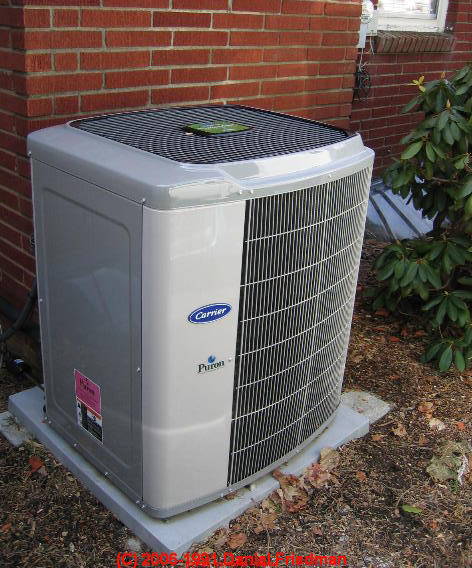
Los Angeles AC condensers are essential to central Los Angeles air conditioning systems. An AC condenser unit will usually consist of a heat exchanger, a compressor and a fan. The heat exchanger cools and condenses the incoming refrigerant vapor into liquid, the compressor raises the pressure of the refrigerant and forces it to move and the fan blows the outer air through the heat exchanger. This results in a cooling of the refrigerant inside the home AC condenser. A central AC condenser is typically located outside the home with a layer of tubing between it and the building that ushers vapor refrigerant in and pulls liquid refrigerant out.

There are many factors that may keep Los Angeles AC condensers from running efficiently, which can keep your home from being as cool as you want it to be and cause unnecessary expenses on your electric bill. Cleaning AC condenser units is often all it takes, which should be part of your annual maintenance service. Or if components of the system are not functioning properly, AC condenser repair may be necessary to make your home comfortable and energy efficient again.

Los Angeles AC condenser replacement may also be the best option if your unit is beyond repair or if it is unable to meet today’s energy efficiency standards. The team of skilled technicians at American Air Conditioning & Heating is prepared to replace Los Angeles AC condenser units for homes of all shapes and sizes in the greater Los Angeles area. We can provide detailed information about the AC condensers that are available, install the unit with the utmost professionalism and provide all the maintenance and repair services you need to keep it running smoothly and efficiently.

Tuesday, July 19, 2011

Sizing and Installation- Los Angeles Air Conditioning


Your new heating and cooling system should be a custom fit for your home. Los Angeles AC can help. Sizing and a handful of other installation practices can dramatically affect how well your new equipment will deliver comfort and savings. Expect to pay a little more for a good contractor who follows these practices.

  • Calculate the size of equipment
  • Seal and insulate ducts in attics and crawlspaces
  • Check and correct air flow
  • Proper refrigerant charging
  • Equipment placement
  • Calculate the size of equipment

For starters your new furnace, boiler, heat pump or Los Angeles air conditioner should be sized to fit your home. You can request a copy of the design load calculation used to determine the right size of equipment for your home. A good contractor will not size your equipment solely on the square footage of your house or assume that your existing equipment was sized properly in the first place. Proper equipment sizing is based your home's heat loss during cold weather and heat gains during warm weather.

To complete the design load calculation the contractor will need to take measurements during the initial visit to your home and ask you some questions. The calculation is usually done using software, and should be based on professional guidelines such as Manual J from the Air Conditioning Contractors of America (ACCA) or similar method. Oversized equipment can cause reduced comfort and excessive "air" noise. Oversizing will shorten the life of the equipment by causing it to cycle on and off more frequently than a properly-sized unit. Undersized equipment, with airflow that is too low, can reduce the efficiency of the air distribution and accelerate wear on system components, leading to earlier failure.

After the design load calculation is completed, ducts, supply registers, and return grilles can be sized and selected using professional guidelines in ACCA's Manual D or similar method.

Seal and insulate ducts in attics and crawlspaces

If you’re installing Los Angeles Air Conditioning and you choose a central air conditioner, furnace or heat pump ask your contractor about the condition of your air ducts. A good contractor should be able to test your air ducts to identify and seal leaks.

Duct sealing should be done by a professional using mastic, metal-backed tape or aerosol-based sealing.
In some instances, your contractor may advise you that it is necessary to replace or add ducts. If there are insufficient supply registers or return air grilles in your home, it may be necessary to install additional ducts to accommodate the need for registers or grilles. When possible ducts should be located within conditioned space. If the ducts must be in unconditioned space (attic or crawlspace) they should be insulated.
Check and correct airflow

For central air conditioners, furnaces or heat pumps there is an optimal air flow for comfort and savings.

If airflow is too high, duct leakage increases and the temperature at the register is not sufficient for optimal home comfort.
If airflow is too low, distribution efficiency drops and accelerates the wear on system components leading to premature failure.
A good contractor will test the air flow of your heating and cooling system and make adjustments for optimal performance. Typically, testing and adjustments should be done after duct leakage repairs have been completed.

Proper refrigerant charging

If your are installing a new central air conditioner or heat pump you should know that recent field studies suggest that approximately 75% of installed cooling equipment may have incorrect amount of refrigerant. Incorrect refrigerant level can lower efficiency by 5 to 20% and can ultimately cause premature component failure, resulting in costly repairs that could have been prevented. A good contractor will use one of three methods, recommended by equipment manufacturers, to verify the correct refrigerant level. These methods include super-heat, sub-cooling, or weigh. Ask your contractor how they verify the refrigerant level is correct.

In addition, you should know that since 1992, in order to protect the earth's atmosphere (ozone layer), all technicians must be certified to handle refrigerant. Ask them to show you proof of refrigerant handling certification.

Equipment placement

Placement of new equipment is unique for every home, but a good contractor should follow manufacturer's installation instructions for best results. For example, Indoor equipment should be installed in conditioned space, or a space that is well insulated. The Outdoor compressors should be placed out of the sun and kept free of debris. Equipment should be installed in an accessible area for easy maintenance. Allow plenty of room for free airflow on all sides of the equipment. Thermostats should be placed away from direct sunlight, drafts, doorways, skylights and windows.

Friday, July 8, 2011

A Little AC History -Los Angeles Air Conditioning


Humans having the desire to stay cool and comfortable during the summer heat has been around long before Los Angeles air conditioning was invented to make that happen. Back during the 1830s people started to mess around with the idea of using ice and a machinery to cool the air they lived in. Dr. John Gorrie was an American physician who lived in Florida at the time. He is credited with the first attempt at building an air conditioner.

Basically what Dr. Gorrie designed was an ice making machine. Air was blown over the bucket of ice to create a cooling effect. There were tons of people suffering from yellow fever and malaria during the 1830s and he was searching for a way to cool the hospital rooms that were filling up with sick patients.

Another attempt at air conditioning was involved with a close to death experience. In 1881, President James Garfield needed to be comfortable. A box of clothes that were covered and soaking up melted ice water was made by navy engineers. A fan was set next to it blowing hot air overhead. It actually worked and was able to lower the rooms temperature by about 20 degrees. This was great however, it was not an efficient way to cool the air because it used up about half a million pounds of ice in just two months.

During 1902 we start to see things a little close to modern day Los Angeles air conditioning. Willis Carrier made an "Apparatus for Treating Air." He lived in Brooklyn, New York and worked for Sackett-Wilhelms Lithographing and Publishing Co. This machine lowered humidity.

The son of John "Bet a Million" Gates, Charles Gates, had the first house that was ever air conditioned. That sounds like today, los angeles air conditioning is most everywhere in LA county now. This was back in 1914. The first AC's were ridiculous, huge and really expensive. They were incredibly dangerous too because they used toxic ammonia to cool the air!

The Carrier company started the industry in 1922 by using a compressor to make AC's smaller. Movie theaters really made the cooling industry take off. In 1925 air conditioning was on Broadway at the Rivoli! After that air conditioning started being installed everywhere- trains, stores, offices etc. 1928 was a big year for The US House of Representatives. They had an air conditioner installed in the Senate, White House and the Supreme Court!

Los Angeles air conditioning today is a common thing. The technology has advanced a lot over the past 75 years and we are here to provide cooling and comfort all over LA county!

Thursday, July 7, 2011

Los Angeles Air Conditioning Technician


What do you know about the people you choose to work in your home?

Los Angeles Air Conditioning promises to deliver only the best quality certified technicians out there. License # 433868

Before a technician becomes an associate with American Air Conditioning they have to under go the following:

1. They must pass a complete drug testing, physical and personality exam.

2. A DMV and Criminal background report.

3. They must undergo a complete apprenticeship program that includes factory training.

4. All of our associates must be clean cut, wear company uniforms, no smoking or profanity is ever allowed.

5. They will be polite, courteous and respectful of your home and its furnishings.

6. They will wear floor protectors over their shoes while in your home and always wear company identification badges for your protection.

7. Our Los Angeles air conditioning company must interview and test more than 100 people just to hire one!

Meet our service team! We provide online profiles with pictures of each and everyone of our employees to ensure our customers have the best understanding of just who is working for them. We understand that it is a big responsibility to be let into someones home. We promise to provide the greatest possible service, thank you for the opportunity.

American Air Conditioning & Heating offers financing and we guarantee our work, making the decision to choose us both comfortable and secure. Give us a call today +1(800)321-9494. We go the extra mile to earn your business and never stop working to keep it.

Wednesday, July 6, 2011

Los Angeles Air Conditioning


Los Angeles air conditioning is not always on the forefront of our thoughts. To tell you the truth most of our customers don't even thing about it until it starts doing something they don't like. Too hot, maybe even too cold, is when everyone starts to think about it! Other than that it just goes straight to the back of our head until “BAM!” a problem arises and we are stuck scrambling on what to do to fix it!

Los Angeles air conditioning experts are here to say that we shouldn’t always let that happen. There are preventative steps you can take to ensure that your cooling system is always working properly and your family stays comfortable during these hot summer heats.

It would be a great feeling if the AC was just a magical box that made the room the perfect temperature every time but we are not quite there yet! Something that we’d like to bring attention is that it is not only more than that regarding cooling your home, but it also has an impact of mold and bacteria circulation in the home, overall air quality, the amount of money your family spends on bills and your overall health!

We are not saying that you have to think about your AC all the time but we are simply asking you to stay aware for warning signs. It won’t be too difficult with the Los Angeles air conditioning experts on your side. We provide quick tips on our Facebook page and within our Twitter feed. If you ever have any specific questions or feedback on how we can help you even further give us a call at +1 (800) 321-9494 or simply drop us a comment on Facebook! We promise to get right back to you with the best answer possible.

The bottom line is your cooling system requires maintenance. It is a big mechanical system with working parts that need to be taken care of if you want them to work properly.

Some quick tips:

Find a Professional for service and repair. Los Angeles Air Conditioning experts
Ask about financial incentives and rebates in your area.
Change your air filter every 30 to 60 days.
Get a regular maintenance check/tune up done every Spring.

Tuesday, June 28, 2011

Energy Efficiency Standards Los Angeles Air Conditioning


Energy efficiency is usually on our minds here in California. The amount of energy emitted from furnaces, heat pumps and central air conditioning units are changing. Arguments over energy efficiency standards aren’t anything new. It is something that has been going on for years. Los Angeles air conditioning experts would like to ask what you think about this topic?

Most recently, consumers were talking a lot about the compact fluorescent light bulbs. Color and the amount of light emitted from them were among the topics of conversation. It is taking awhile to start getting used to these bulbs but we are going to have too because not long until these are the only bulbs on the market. They do cost a little more, that is one of the reasons people have been talking but in the long run they will save you money on electricity. Los Angeles air conditioning experts do recommend purchasing compact fluorescent lightbulbs (CFL) because it will save you money in the long run and will save energy for our beautiful Southern California.

As far as furnaces, heat pumps and central air goes, most likely prices will be going up again. This is sparking controversy because while the prices are going up the savings aren’t going to be extremely tremendous. This change is more about environmental impact on the world. It is about making smarter decisions for our future as a society as a whole.

To see direct savings will take some time. The price increase for products etc. will eventually lead to energy savings. To help you understand this realistically: The new standards would be able to heat every home in the state of New York for 11+ years straight with the savings over a 32 years period! Savings every is always good too because it means fewer blackouts and there will not be as much air pollution.

The U.S. Department of Energy is who creates the standards for central air, furnaces and heat pumps.

May 1, 2013 is the expected date for the new standards to start taking effect.

Los Angeles air conditioning experts American Air Conditioning are always here to bring the latest news to you.

Monday, June 27, 2011

Los Angeles Air Conditioning Compressor


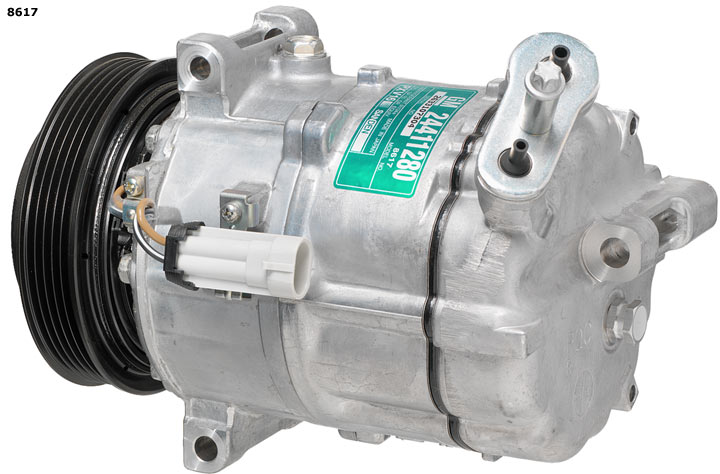
There is usually little in between on whether an air conditioning unit works or doesn’t. The heart of any air conditioning unit is the Compressor. It is what allows the unit to function properly and deliver that cool air we all are accustom too. The compressor on an air conditioner is usually misunderstood by most consumers today.

Your Los Angeles air conditioning experts are here to try and change that. We like to provide our customers with the knowledge to fully understand the cool systems they have in their homes if they want too. The compressor is a pump driven by an electric motor. The pump has valves and pistons inside that are kind of like your car engine.

Scroll compressor: Set of spirals (more efficient because there are no reciprocating parts.)

Rotary compressor: Acts like a vane pump. These are usually found in window units because they are common in smaller air conditioners vs larger systems.

Residential air conditioners are usually hermetic (the motor and the part that pumps is built into one box called a can.) The can is where you can find the electric motor. The refrigerant flows over the motor windings to cool it as it runs. Varnish covers the insulation of the motor windings so that it doesn’t react with the refrigerant. If it becomes acidic it will eat the windings and the motor will burn out. A smaller problem would be for the circuit breaker or fuse to blow. If that doesn’t happen than the motor will continue to run and ruin the refrigeration system. A system that is short of refrigerant will overhear the motor a system that is overcharged can flood the compressor causing “liquid slugging.” A bad crankcase heater will also cause damage due to liquid. This is not as much a problem on smaller systems but will destroy larger units or systems with a lot of refrigerant charge.

If the hermetic compressor fails the only way to fix the system is to replace it.

If the run capacitor fails the motor will not start and draw excessive current than it should and over heat (tripping) it’s internal protector (also known as an “overload”). If it doesn’t have a start capacitor it probably should. Especially if it has problems starting under load. If the cooling coil is replaced with one that has a thermostatic expansion valve as opposed to capillaries or an orifice. You may think that the compressor is bad because it won’t start. Scroll compressors do not need start components but they DO need and anti restart timer or they can run backwards if the power is interrupted. A rotary compressor can do the same thing under certain conditions.

There are many different brands of compressors out there today. For example: Bristol, Tecumseh and Copeland, Manurope, Trane, Danfoss, Aspera, Dunham Bush, Carlyle (Carrier) and York. You can view these brands online, some of them even have Facebook pages like us. We post the latest tips and tricks for everything Heating and Los Angeles air conditioning.

Do you have more questions about compressors? Give a certified Los Angeles air conditioning expert a call today at +1(800)321-9494.

Thursday, June 23, 2011

What kind of air filter should you get in addition to your Los Angeles air conditioning?


There are air cleaning systems that are better at removing the different types of air pollution than another. For example, some of them primarily target allergen particles so they would remove these from the air more efficiently than one that focuses on smoke.

Los Angeles air conditioning specialist are here to help you figure out which one will work best for your family!

Mold, viruses and bacteria are contaminants that we have to look out for when considering indoor air quality. They are to small for the eye to see and they actually are able to living in environments even when air filters are present. You have to be extremely careful because sometime even your air filter can be a host for mold to grow and fester. Some air filters can get moist and facilitate this problem so keep and eye out!

UV germicidal lights can get rid of molds, bacterias and viruses fairly easily. These are a great way to keep your family safe and breathing the best air possible inside your home.

We are the Los Angeles air conditioning experts and we focus heavily on indoor air quality. If you have any questions whatsoever feel free to give us a call today. +1(800)321-9494

Different types of air filters:

Particle Removal

Mechanical air filters:
These air filters work by catching the particles that are compromising your air quality in filters.

Electronic air filters:
These air filters used electrostatic attraction to trap charged particles. The air gets drawn through an ionization section where particles obtain an electrical charge.When the ions attach to airborne particles they attach to nearby surfaces faster.

Gaseous Pollutant Removal:
These air filters that use sorbent. It is an activated carbon that absorbs the pollutants.

Pollutant Destruction:
These air filters use ultraviolet (UV) light to destroy the pollutants inside you home.

Ultraviolet Germicidal Irradiation (UVGI) and Photocatalytic Oxidation (PCO) are two air filters that are pollutant destructive.

UVGI uses ultraviolet radiation from lamps to destroy any viruses, bacteria allergens and molds that are in your home. They should be used with filtration systems. They are most effective together.

PCO are UV lamps and a substance called a catalyst that reacts with the light. It coverts the gas pollutants to be harmless. The pollutants will still be in the home, it is not designed to remove them.

American Air Conditioning & Heating is your Los Angeles air conditioning experts since 1981!